
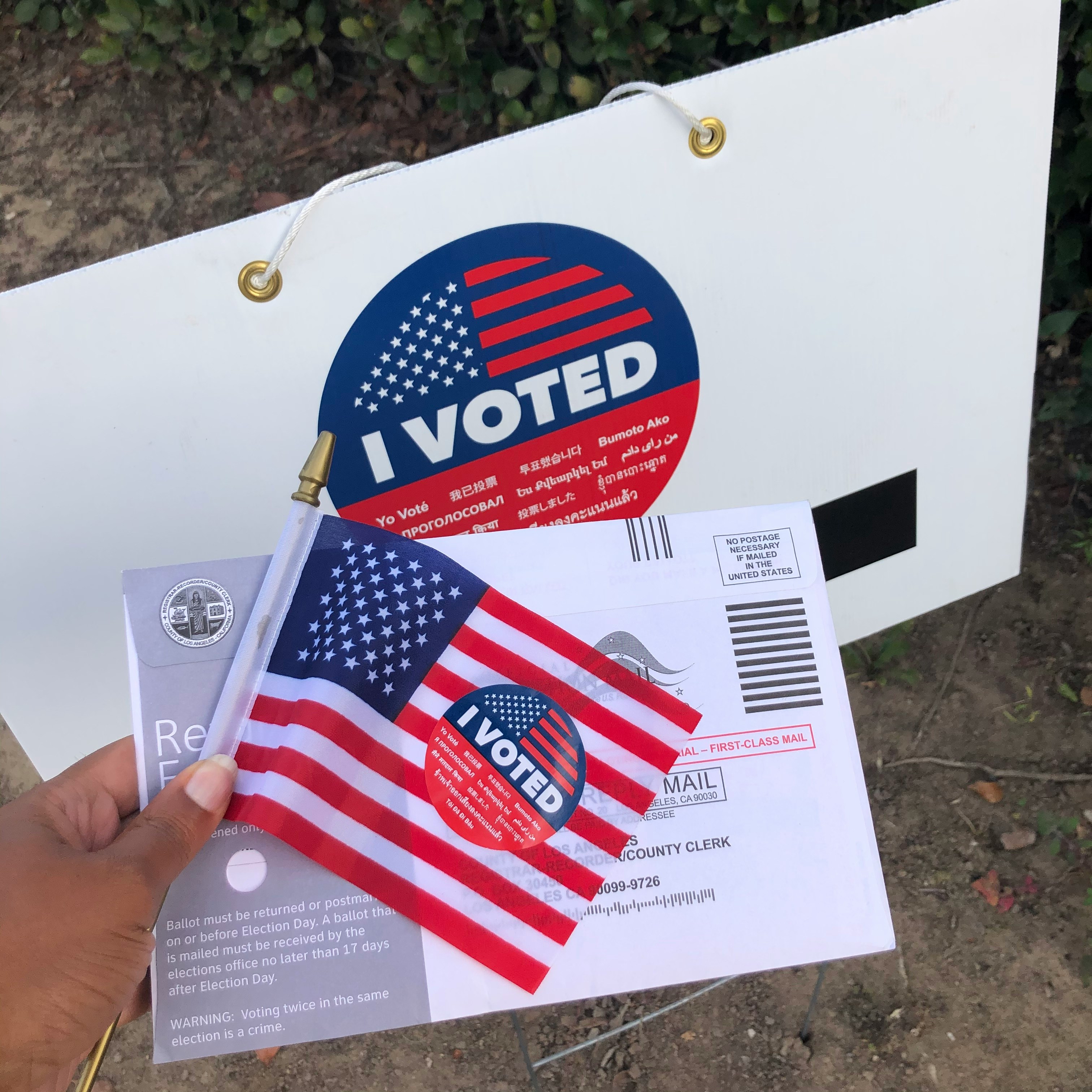
The U.S. Supreme Court has agreed to hear a lawsuit challenging Illinois’ vote-by-mail rules that allow ballots to be counted within 14 days of Election Day if they’re postmarked by Election Day.
U.S. Rep. Mike Bost, R-Ill., and two GOP elector nominees filed the lawsuit in May 2022. They allege that Illinois violated federal law by extending what is legally defined as Election Day — the first Tuesday after the first Monday in November — to allow additional ballot counting.
“Illinois is not allowed to hold open voting for congressional and presidential [elections] beyond the single Election Day,” the lawsuit reads. “Counting ballots received after Election Day harms Plaintiffs. Among other harms, Plaintiffs votes will be diluted by illegal ballots received in violation of the federal Election Day statutes.”
“Counting untimely votes and those received in violation of federal law substantially increases the pool of total votes cast and dilutes the weight of Plaintiffs’ votes,” the lawsuit continues. “More votes will be counted than the law allows to be counted, resulting in dilution. Likewise, untimely votes will be counted after the federal Election Day deadline, defined as ‘the combined actions of voters and officials meant to make a final selection of an officeholder.’”
Legal Showdown: Illinois Ballot Counting Rules
The plaintiffs claim in court documents that they will be subject to harms they call “severe and irreparable.”
The plaintiffs are asking the court to declare Illinois’ deadline unlawful and to block officials from counting ballots received after Election Day.
The lawsuit names as defendants the Illinois State Board of Elections — the independent agency that oversees election laws in Illinois — and its executive director. A spokesperson for the Illinois State Board of Elections declined to comment, citing the pending litigation.
But in a brief filed in court in 2023, Alex Hemmer, an attorney for the Board, wrote, “No court has recognized a vote-dilution theory of standing in a case like this, and this court should not be the first to do so.”
“The deadline statute likewise does not harm plaintiffs as candidates for public office. Plaintiffs do not contend that the deadline statute will somehow affect their electoral prospects; rather, they argue mainly that they are entitled to have their elections certified ‘in compliance with the law,’” Hemmer wrote.
In a statement to Capitol News Illinois, Bost welcomed the Supreme Court’s review.
“With the American people’s confidence in our elections at a discouraging low point, it’s more important than ever we work to restore their trust,” Bost said. “I believe a big part of that effort is ensuring all votes are tallied by Election Day, not days or weeks later.”
Legal Hurdles: Standing and Lower Court Rulings
The Supreme Court is hearing the case after two lower courts dismissed the lawsuit.
A divided panel of the Seventh Circuit affirmed the district court’s dismissal of the case for lack of standing.
“The majority held that the petitioners had not pleaded an injury in fact because, in the court’s opinion, they did not need to conduct post-election monitoring of late-arriving ballots in 2022 and, thus, any expenses incurred from monitoring were self-inflicted,” reads the petition for writ of certiorari to the U.S. Court of Appeals for the Seventh Circuit.
The plaintiffs petitioned the Supreme Court on Nov. 19, 2024, and on June 2, the court agreed to take up the case. A hearing date has not been set.
National Context: Mail-in Voting Across States
Illinois is among 18 states and Washington, D.C., that accept mail-in ballots after Election Day. Across those states, allowable postmark deadlines range from 1 to 21 days after a general election, according to the National Conference of State Legislatures.
In 2020, as the presidential election overlapped with the COVID-19 pandemic, voter eligibility for mail-in voting was broadly expanded to accommodate public health concerns. In response, a record 32% of voters opted to cast their ballot by this method. Since then, mail-in voting has contracted, with MIT’s Election Data Science Lab reporting a more than 10- point drop in 2022.
While it’s not clear what implications a Supreme Court decision could have on the mail-in ballot issue nationwide, voting rights advocates fear restricting mail-in ballot counting could suppress voter participation, especially among groups such as people with disabilities, older adults, and voters of color, who disproportionately rely on the voting method for access and convenience, according to the Brennan Center for Justice, a nonpartisan law and policy institute.
One study found that the state of Texas rejected thousands of mail ballot requests and mail-in votes during the 2022 primary, disproportionately those of nonwhite voters.
Federal Action Raises the Stakes
The Illinois case comes amid a broader national debate over mail-in voting. In March, President Donald Trump issued an executive order calling for the requirement of documentary proof of citizenship for voter registration and for the enforcement of mail-in ballot deadline rules.
“Free, fair, and honest elections unmarred by fraud, errors, or suspicion are fundamental to maintaining our constitutional Republic,” the executive order says. “The right of American citizens to have their votes properly counted and tabulated, without illegal dilution, is vital to determining the rightful winner of an election.”
A court challenge alleges the President does not have the authority to dictate U.S. election rules.
“The Framers of our federal Constitution foresaw that self-interested and self- aggrandizing leaders might seek to corrupt our democratic system of government to expand and preserve their own power,” the lawsuit said. “They therefore created a decentralized system of elections based upon separated powers divided among the leaders elected by—and closest to—the people.”
A judge has put the executive order on hold.
Why This Case Matters to Voters
The American Civil Liberties Association in March sued Trump over this executive order, calling it “a blatant overreach that threatens to disenfranchise tens of millions of eligible voters.”
“This measure will no doubt disproportionately impact historically excluded communities, including voters of color, naturalized citizens, people with disabilities, and the elderly, by pushing unnecessary barriers to the fundamental right to vote,” the ACLU said. “We deserve better than elected officials weaponizing xenophobia and the myth of voter fraud to jeopardize our rights. We will do everything in our power to stop this unconstitutional attack on the right to vote to ensure that every eligible American can participate in our democracy. We will see President Trump in court.”
About Us
WeVote is a nonprofit technology startup creating a digital voter guide informed by issues you care about—and people you trust. From local and national elections to pivotal moments, our nonpartisan, open-source platform will help you vote, up and down the ballot. Ready to take action? Volunteer with WeVote or donate.

Leave a Reply